
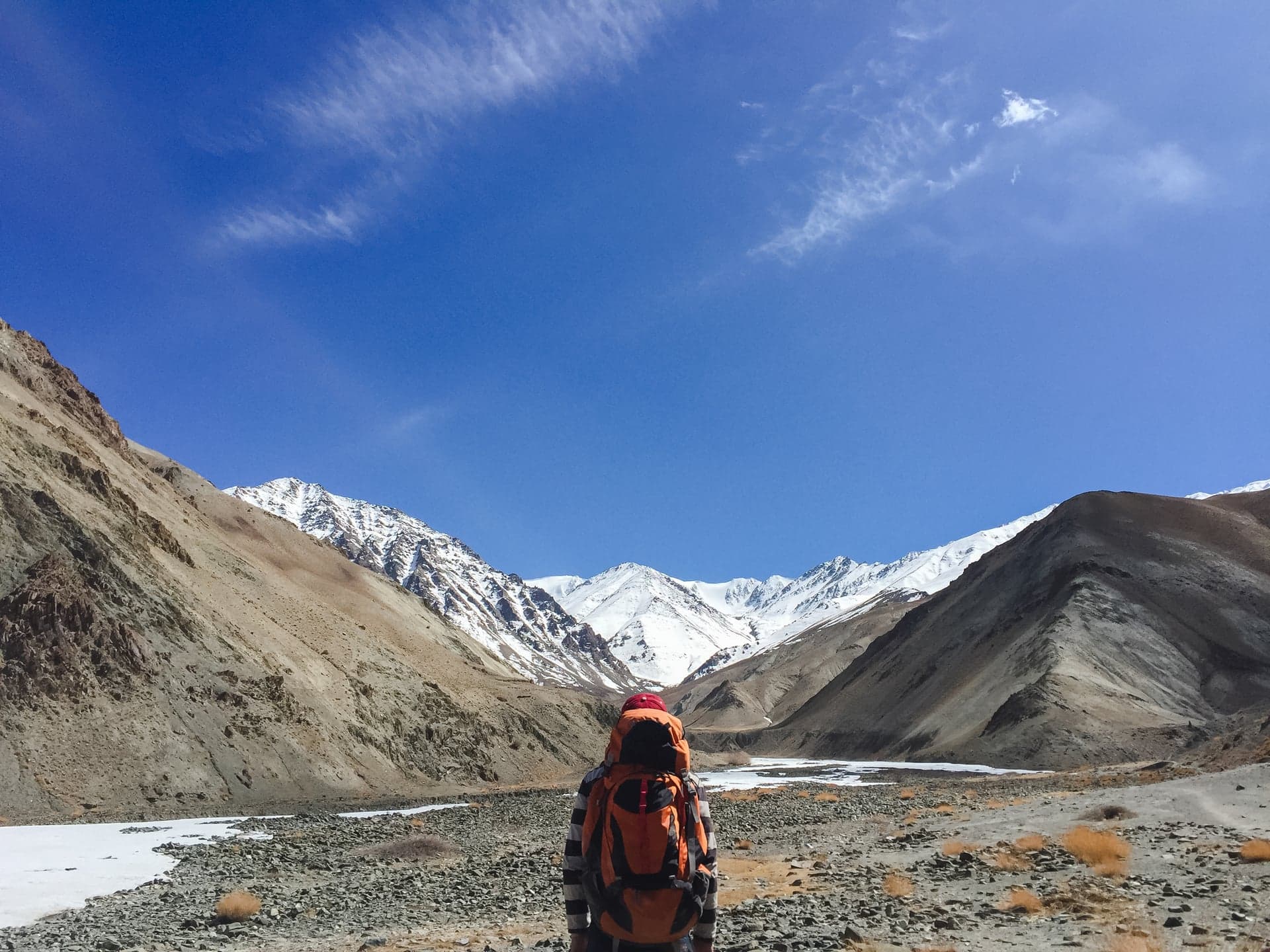
Worried about altitude sickness in Ladakh? Learn when AMS occurs, key symptoms, acclimatization tips, and how to prevent AMS in Leh Ladakh.
Altitude sickness in Ladakh is one of the most common problems travelers face, especially first-time visitors. With Leh located at an altitude of around 3,500 meters (11,500 ft), the sudden drop in oxygen levels can cause Acute Mountain Sickness (AMS) if your body doesn’t get enough time to adjust.
Most cases of altitude sickness in Ladakh happen because travelers ignore acclimatization on the first day in Leh.
Quick Facts: Altitude Sickness in Ladakh
Leh altitude: 3,500 meters (11,500 ft)
AMS onset: 6–24 hours
Highest risk: Day 1–2
Best prevention: Rest + hydration
Worst mistake: Pangong Lake on Day 1
In this guide, you’ll learn how to avoid altitude sickness in Ladakh, when AMS usually occurs, symptoms to watch for, Ladakh acclimatization tips, and proven ways to prevent AMS so you can enjoy your trip safely.
What Is Altitude Sickness and Why Is It Common in Ladakh?
Altitude sickness happens when the body struggles to adapt to lower oxygen levels at high altitude. Ladakh is particularly challenging because travelers often fly directly to Leh, causing a rapid altitude gain in just a few hours.
Why altitude sickness in Ladakh is common:
Leh is already at very high altitude
Oxygen levels are only about 60–65% of sea level
Many travelers overexert on Day 1
Poor hydration and lack of acclimatization
AMS in Ladakh can affect anyone - fitness, age, or gender does not guarantee protection.
When Does Altitude Sickness Occur in Ladakh?
Most people experience AMS within 6 to 24 hours of reaching Leh. For some, symptoms may appear on the first night, while others feel it on Day 2 or Day 3, especially after visiting higher-altitude places.
High-risk times for AMS in Ladakh:
First night after arriving in Leh
After physical activity on Day 1
Traveling to Pangong Lake, Nubra Valley, or Khardung La too early
Understanding when altitude sickness occurs in Ladakh helps you plan your itinerary more safely.
Symptoms of Altitude Sickness in Ladakh (AMS Symptoms)
Mild AMS Symptoms
Headache
Nausea or loss of appetite
Dizziness
Fatigue
Trouble sleeping
Severe AMS Symptoms (Medical Emergency)
Shortness of breath at rest
Confusion or loss of coordination
Chest tightness
Persistent vomiting
If severe symptoms appear, do not ascend further and seek medical help immediately.
How to Avoid Altitude Sickness in Ladakh (Proven Tips)
This is the most important part of your trip. Follow these tips strictly.
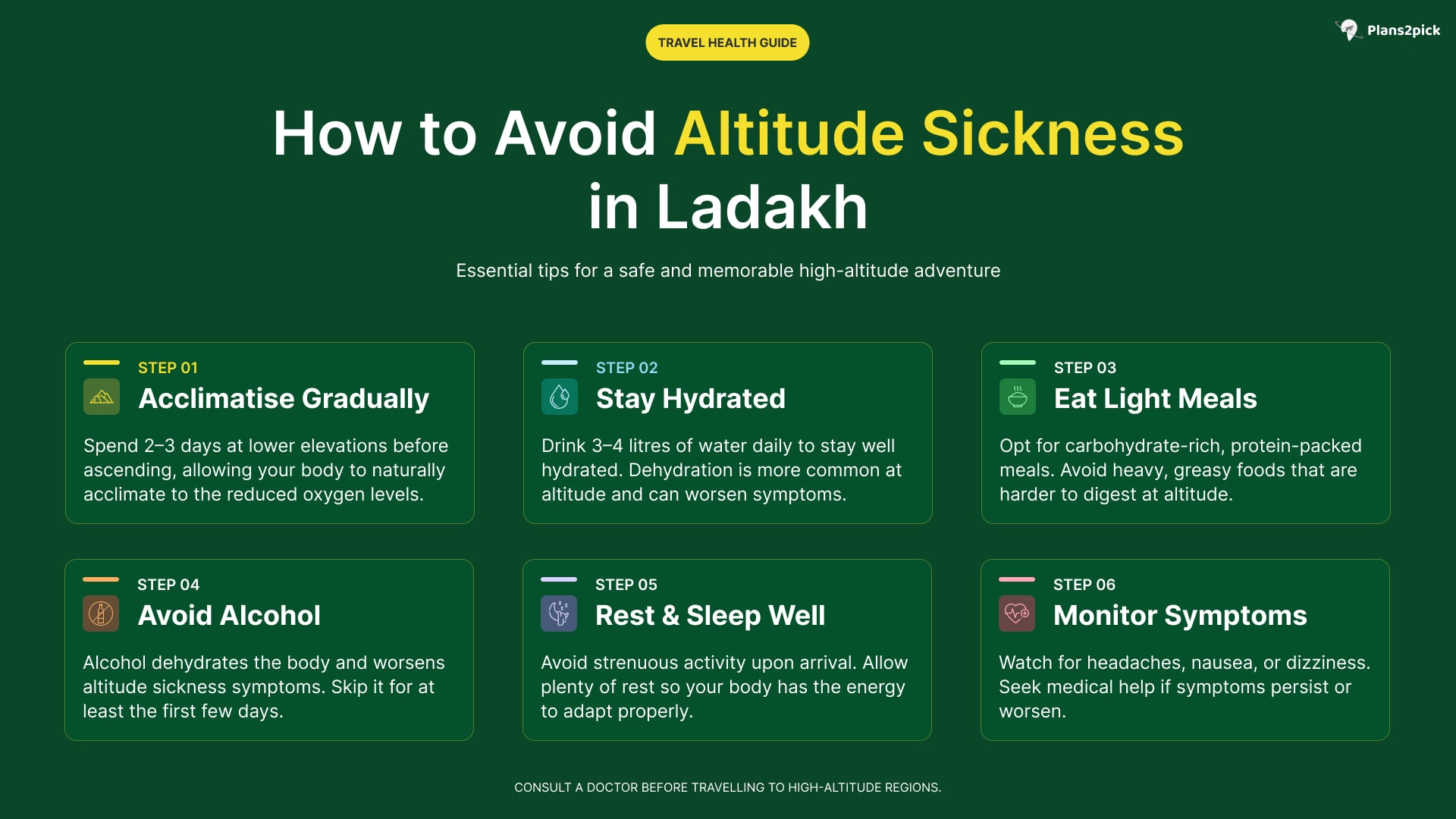
1. Acclimatize Properly in Leh (Most Important Tip)
Proper acclimatization is the best way to prevent AMS in Ladakh.
Leh acclimatization tips:
Rest completely on Day 1
Stay within Leh town
Avoid sightseeing, biking, or trekking
Leh first-day acclimatization alone can prevent most AMS cases.
2. Flying Directly to Leh? Read This Carefully
Flying directly to Leh increases the risk of altitude sickness because your body has no time to adjust.
If you fly to Leh:
Do nothing on Day 1
No Pangong Lake, no Khardung La, no Nubra Valley
Eat light food and hydrate
Flying directly to Leh altitude sickness is one of the most common mistakes travelers make.
3. Stay Hydrated at High Altitude
Dehydration worsens AMS symptoms.
Drink 3–4 liters of water daily
Add ORS or electrolytes
Avoid alcohol and smoking for the first 48 hours
Hydration is a simple but powerful way to prevent altitude sickness naturally.
4. Eat Light, High-Carbohydrate Food
Your body needs easily digestible energy at high altitude.
Dal, rice, soup, vegetables
Avoid oily and heavy food
Eat small meals frequently
5. Avoid Overexertion in the First 2 Days
Walk slowly
Avoid running, biking, or heavy activity
Take frequent breaks
Fitness does not prevent altitude sickness.
6. Medicines for Altitude Sickness in Ladakh
Diamox (Acetazolamide) is commonly used for AMS prevention.
Important points:
Consult a doctor before taking it
Start only if recommended
Medicines support acclimatization — they don’t replace it
If you’re unsure, always prioritize rest over medication.
Disclaimer: This article is for informational purposes only and does not replace professional medical advice. Always consult a doctor before taking any medication.
Common Mistakes That Cause AMS in Ladakh
Visiting Pangong Lake on Day 1
Drinking alcohol on arrival
Ignoring headaches or nausea
Riding bikes immediately after landing
Not drinking enough water
Most AMS cases are caused by poor planning, not bad luck.
How Long Does AMS Last in Ladakh?
Mild AMS: 1–2 days with rest
Moderate AMS: 2–4 days
Severe AMS: Requires descent and medical care
If symptoms don’t improve, do not ascend further.
Who Is Most at Risk of Altitude Sickness in Ladakh?
First-time high-altitude travelers
Children and elderly travelers
Bikers and trekkers
People with heart or lung conditions
Knowing who is at risk helps plan safer itineraries.
FAQs About Altitude Sickness in Ladakh
Can you prevent altitude sickness completely?
No, but proper acclimatization and hydration can significantly reduce the risk.
Is altitude sickness common in Leh?
Yes, especially among travelers who fly directly and don’t rest.
Is Diamox safe for Ladakh travel?
Generally yes, but only under medical advice.
Should you rest on the first day in Leh?
Yes. Resting on Day 1 is essential to avoid AMS.
What are the oxygen levels in Ladakh?
Oxygen levels in Leh are around 60–65% of sea level, which is why acclimatization is critical.
Final Thoughts
Altitude sickness in Ladakh is serious but completely manageable if you travel smart. Follow proper acclimatization, stay hydrated, eat well, and respect your body’s limits. With the right planning, you can enjoy Ladakh safely and comfortably.
If you’re planning your first Ladakh trip, bookmark this guide and follow these acclimatization tips to avoid AMS.
Written by